
King Saul – Disobedience rarely shows up loud and obvious—it starts small, subtle, almost reasonable in the moment. But every step outside of God’s will weakens the foundation of a person’s life. When someone chooses their own impulses over God’s instructions, the heart begins to drift, clarity fades, and insecurity takes the driver’s seat. What begins as a single compromise can quietly grow into a pattern that distances a person from the very presence and direction they desperately need.
And that’s the real danger: sin doesn’t just stain—it reshapes. It bends motives, distorts judgment, and pulls a person into choices they never imagined making. Saul’s story stands as a sobering example of how a destiny designed by God can unravel when obedience becomes optional. His downfall reminds every believer that spiritual drift always begins with small decisions, and the cost of disobedience is far heavier than the moment of temptation ever suggests.
How insecurity, disobedience, and envy dismantled Israel’s first anointed leader!
SETUP — The Rise Before the Ruin
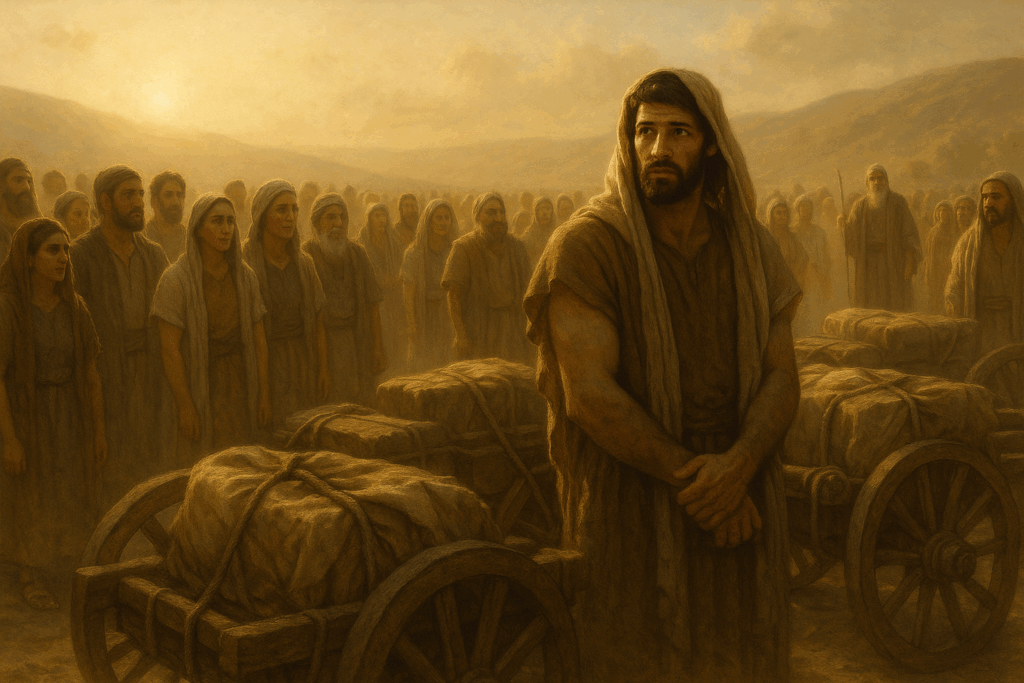
Before King Saul ever stumbled, he stood as a man with staggering potential. Chosen by God, anointed by Samuel, and lifted from obscurity to lead an entire nation—his story began with promise, not failure. Israel wanted a king they could see, someone who looked powerful, someone who could stand at the front of the battlefield. Saul fit the description perfectly. He had the stature, the presence, and the calling. Destiny was placed squarely in his hands.
But calling alone never guarantees character. A strong beginning is only as steady as the heart that carries it. Saul’s early days reveal a man torn between humility and fear, confidence and insecurity. And that inner war—unresolved and un-surrendered—would become the very battleground where obedience would eventually falter. Before his fall became visible, the conflict within him was already brewing. Saul’s rise reminds us that God can elevate anyone—but it’s obedience that keeps them standing.
THE FIRST CRACK — Where Fear Starts to Shape a King Saul
Every fall begins long before anyone notices. For King Saul, the earliest signs weren’t dramatic—they were internal. A quiet fear. A restless insecurity. A constant need to prove himself to the people he was called to lead. Even with God’s anointing on his life, Saul struggled to trust the God who placed him there. And when fear drives a leader, obedience becomes unstable.
These hidden cracks mattered because the heart is always the first thing to slip. Fear clouds judgment. Insecurity twists motives. And when a person starts relying more on their own strength than on God’s voice, compromise doesn’t feel like compromise—it feels like survival. Saul wasn’t openly rebelling yet, but the seeds were planted. The same seeds that live in every believer when we let fear speak louder than faith.
THE FIRST BREAK — When Disobedience Steps Into the Light
The moment King Saul’s inner struggle became outward was subtle but significant. Pressure hit, fear rose, and instead of waiting on God’s timing, King Saul stepped ahead of God’s command. It wasn’t loud rebellion—it was impatience dressed as responsibility. A move that looked practical… but wasn’t obedient.
This is where the danger becomes clear: disobedience often disguises itself as urgency. Saul wasn’t trying to abandon God—he was trying to control the outcome. And that’s the trap many fall into. When we respond to fear instead of faith, even small compromises begin reshaping our relationship with God. Saul’s first act of disobedience wasn’t about action—it was about trust. And once trust cracks, obedience becomes negotiable.
THE TURNING POINT — King Saul Disobedience Becomes a Pattern
Every destiny-shaping moment has a line in the sand, and for Saul, this was it. What began as a single compromise slowly hardened into a habit. Instead of aligning his heart with God’s instructions, Saul started choosing what felt right, what looked right, what made sense to him and the people around him. Obedience wasn’t rejected outright—it was reshaped to fit his preferences.
This is where a life begins to drift for good. Repeated disobedience doesn’t just break God’s commands—it bends the heart. It dulls conviction. It widens the gap between what God says and what we choose. Saul didn’t collapse in a moment; he drifted through a series of small decisions that led him further from the God who had chosen him. And once that drift became his normal, the course of his destiny shifted beyond return.
Best selling products



THE SPIRAL — When a Heart Drifts Too Far to Recognize Itself
Once disobedience became Saul’s pattern, the downward pull only grew stronger. What begins as distance from God eventually becomes distance from yourself—your identity, your calling, your peace. For Saul, the insecurity that once whispered now shouted. The fear that once lingered now ruled. And the jealousy that once flickered now burned fiercely. A heart out of alignment with God becomes a heart vulnerable to every other voice.
This spiral didn’t happen overnight. It unfolded as Saul compared himself to others, fought to hold onto control, and slowly lost the inner grounding that obedience provides. When a person stops listening to God, they inevitably start listening to everything else—fear, suspicion, pride, and the opinions of people. Saul’s story shows how quickly the soul unravels when God’s voice becomes background noise instead of the anchor.
THE OUTCOME — When Distance From God Becomes Destiny
Every path has an end, and Saul’s path—marked by fear, compromise, and drifting obedience—led him to a place God never intended for him. When a heart moves far enough from God, clarity fades, strength fades, and purpose collapses under its own weight. Saul didn’t just lose a crown; he lost the stability, peace, and direction that come only from staying aligned with God. A destiny meant to be powerful and God-centered unraveled because the connection that sustained it was slowly severed.
And that’s the sobering truth: the cost of persistent disobedience is never just external—it’s internal. A person can still hold their position, still carry their title, still look the part… while everything inside is crumbling. Saul’s final state reveals what happens when someone resists God long enough that their own decisions become their downfall. His life becomes a living reminder that ignoring the small spiritual shifts eventually leads to consequences too heavy to reverse.
Christian Brokenness and Redemption: Tale of Three Kings


