
A Road Where Mercy Wasn’t Supposed to Exist
The story opens the way Jesus tells it in Luke 10:30: a man is traveling from Jerusalem down to Jericho. Nothing more is said of this traveler, no name, tribe, age, or occupation. The silence is intentional when He describes a scene of no mercy for this lonely traveler. Jesus gives him no identity because He wants every listener to see themselves in him.
What is clear is the road he chose: a steep, desolate descent stretching roughly eighteen miles, dropping over three thousand feet through rugged limestone canyons and exposed passes. In the first century, this route was so notorious for ambushes that some later, Jewish sources referred to it as the “Way of Blood”. Most likely a title that was descriptive rather than official. Historically reasonable due to the heavy bandit activity common in that region.
How an unexpected act of compassion of a Good Samaritan shattered cultural hostility and revealed the heart of God.
On this road, Jesus says simply that the man “fell among robbers.” They strip him, beat him, and leave him “half dead.” Every detail carries weight. To be stripped meant humiliation and vulnerability; to be beaten meant he could not move; to be left half dead meant he hovered between life and death with no ability to call for help. Jesus describes a man who has been reduced to absolute dependence. Nothing in the text suggests he brought this upon himself. There is no moral lesson about poor planning or bad choices—only the raw human experience of suffering imposed by others.
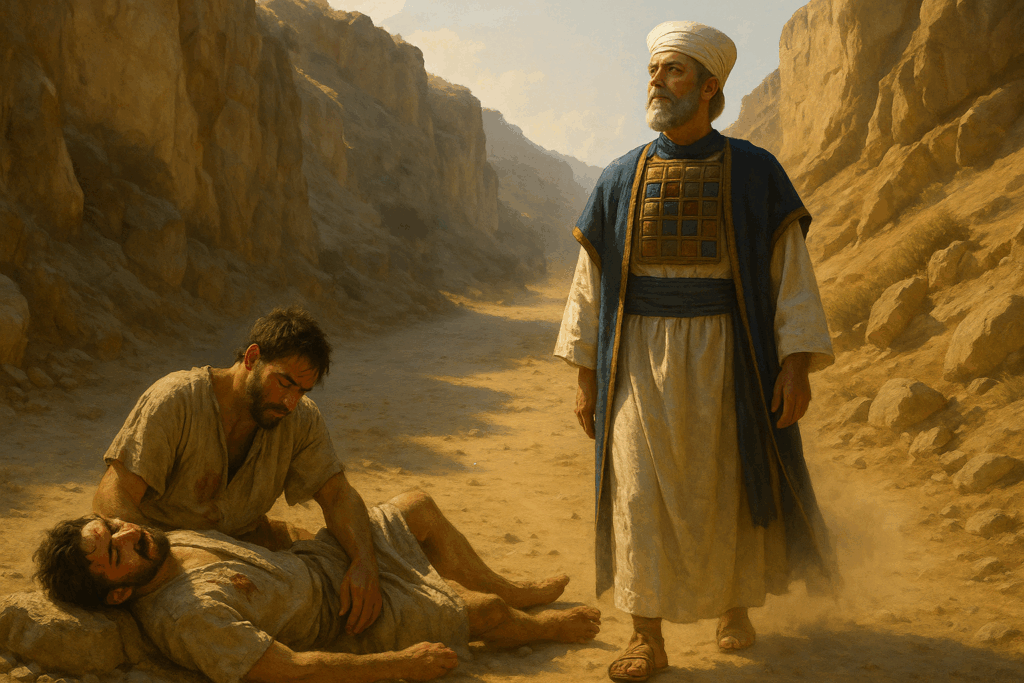
The Lonely Road:
Through Danger and Despair
The geographical context intensifies the tension. Travelers would often move in small groups for safety, but Jesus presents this man alone. Historically, the terrain offered long stretches where cliffs narrowed the path, giving attackers the advantage. Anyone passing through knew the risks. People chose this road because it was faster, not because it was safe.
This is where the emotional undercurrent begins to rise. In Jesus’ audience, every listener would have understood the fear embedded in this moment. They knew what it meant to depend on the mercy of strangers. The man’s silence—of which Jesus says nothing—is not literary drama; it is the reality of someone too wounded to speak.
When Sacred Duty Fails:
The Priest and Levite’s Silent Passage
Into this scene comes the first glimmer of hope: a priest “happened to be going down that road.” In Jewish society of the time, a priest represented spiritual leadership, someone expected to reflect God’s compassion. Yet the text states that he sees the wounded man and passes by on the other side. Scholars often debate his motivation. Some suggest ritual purity concerns (labeled scholarly interpretation, not explicit in the text), since priests avoided potential contact with corpses. Others propose fear of bandits still nearby. But the Gospel does not supply a reason. Jesus leaves his motivation unspoken, which forces the audience to sit with the discomfort of religious responsibility colliding with human suffering.
The next traveler, a Levite, responds similarly. Levites served in the Temple system, respected for their role in worship and instruction. He, too, sees the man and chooses distance over intervention. Again, no motive is provided. What the text highlights is the unmistakable pattern: two men who publicly represented God’s service withdraw from a moment that demanded mercy.
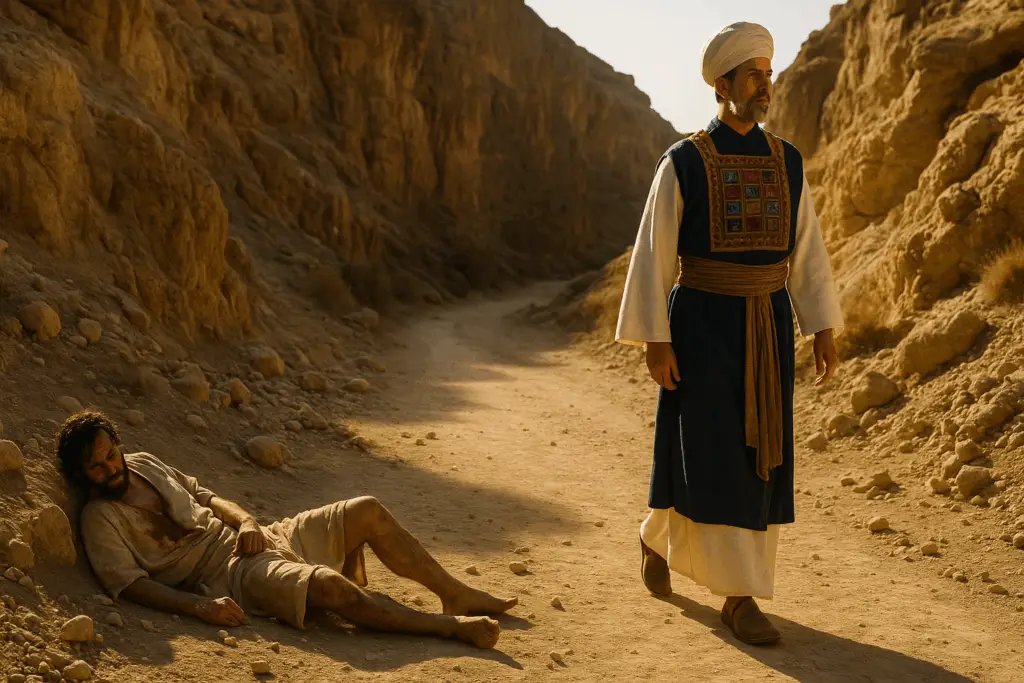
The Agony of Abandonment:
When Mercy Fails on the Road
The visible consequence for the wounded traveler is devastating. Every footstep that nears and then fades away deepens the isolation. By the time the Levite disappears into the distance, the man has endured not only violence but abandonment. This is what Jesus wants His listeners to feel—the ache of being seen but not saved.
Nothing supernatural occurs here. No symbolic embellishment. Just a man dying on a road where strangers should have intervened but didn’t. This is the world Jesus confronts: a real road, real danger, and real choices made by real people. And into this bleak, abandoned moment, the story prepares for its staggering reversal—one that no one listening would have expected.
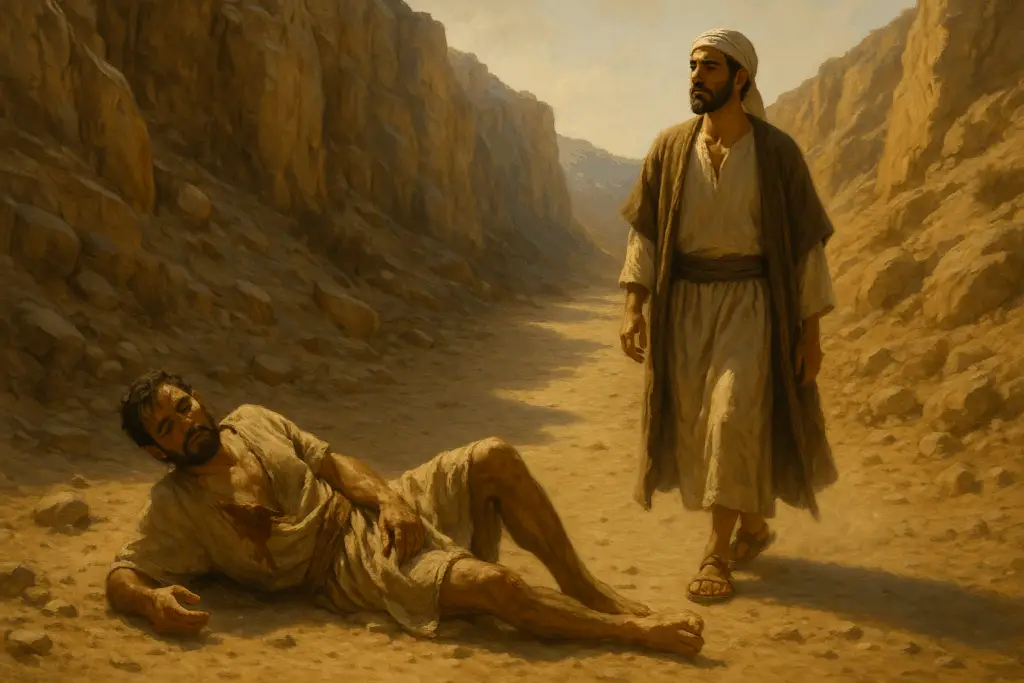
Reluctant Hearts, Radical Choices: Three Men, Three Decisions, One Broken System
The Levite’s Close Encounter and the Silent Rejection of Mercy
When Jesus continues the parable in Luke 10:31–32, the tension shifts from the brutality of the attack to the unsettling responses of those who encounter the wounded man. The priest has already passed by, but Jesus doesn’t let the discomfort fade. He presses deeper by introducing a Levite—a man from the tribe entrusted with assisting in Temple worship and maintaining the rituals that shaped Israel’s spiritual life. His presence on the same dangerous road is entirely plausible; many priests and Levites lived in Jericho and traveled regularly to Jerusalem for their service rotations.
The Levite “came to the place,” Jesus says. The wording matters. Unlike the priest, who simply “saw” and avoided, the Levite comes closer, approaching the very scene of violence. He sees the same broken body, the same stripped and bloodied form lying helpless in the dust. Yet the outcome is identical: he crosses to the other side and continues on his way. The Gospel offers no commentary, no explanation, no softened rationale. It leaves the silence hanging in the air.
Best selling products




Exposing a Broken Religious System:
Compassion Lost in Ritual and Fear
This moment reflects something deeper than individual choices. Jesus is exposing a system—one where religious identity can coexist with moral blindness. The priest and Levite are not villains; Jesus never portrays them with malice. He simply shows their failure to act. Some scholarly interpretations suggest ritual purity laws as a possible factor (Numbers 19 details how contact with a dead body rendered a person unclean), but Jesus never confirms this. He avoids excusing their behavior, making the inaction itself the point. Their proximity to sacred duties does not automatically translate to compassion.
What intensifies the emotional weight is that both men make their decisions in full view of need. There is no ambiguity about the situation. The man is half dead, stripped, beaten, and clearly unable to move. Their refusal is not a misunderstanding—it is a choice defined by self-preservation, fear, or rigid boundaries. And their absence becomes part of the suffering.
Unmasking the System:
How Religious Elites Fail in Having Mercy
In a first-century Jewish audience, the priest–Levite sequence would have been familiar. When religious figures are introduced in stories or teachings, listeners often anticipate a third figure—someone “ordinary,” like an Israelite layperson—who will correct the failures of the first two. Jesus sets up this expectation deliberately. The crowd would have leaned in, waiting for the predictable hero who restores honor to the community.
But instead of rescue, Jesus gives them silence and tension. The two expected helpers walk away. The hierarchy—priest, then Levite—has played its part, and the pattern seems complete. The downward slope in moral responsibility mirrors the downward descent of the Jericho road itself. The scene becomes a commentary on the human instinct to avoid entanglement with suffering, even when one claims devotion to God.
The Long Wait for Mercy:
An Ache Only the Samaritan Can Heal
And for the wounded man, the consequences remain severe. Hope rises with each approaching step and collapses each time a figure passes. By presenting two consecutive refusals, Jesus invites the listener to feel the ache of waiting for mercy that does not come. The road remains hostile. The air remains still. The man remains dying.
Only when the audience’s expectations have been stripped bare—just like the traveler on the ground—does Jesus introduce the figure who will redefine the entire narrative.
Continue to Read: Transforming Mercy: Love That Sees No Enemy


