
God uses ordinary people to change history. That’s because history isn’t written only by kings, conquerors, or prophets. Sometimes, God writes it through the quiet obedience of ordinary people — those who stand in courage when fear rules the world. Queen Esther stands as one of those remarkable stories: a young woman with no crown, no power, and no choice, yet called to change the course of history.
In every generation, God raises someone who seems unlikely — someone who doesn’t fit the mold of worldly greatness. Queen Esther was an orphan, an exile, and a woman in an empire ruled by men. Yet through her, God proved that no circumstance is too small, no place too hidden, and no person too powerless for divine purpose.
“And who knows but that you have come to your royal position for such a time as this?”
— Esther 4:14 (NIV)
Exile and Empire — The World of Queen Esther
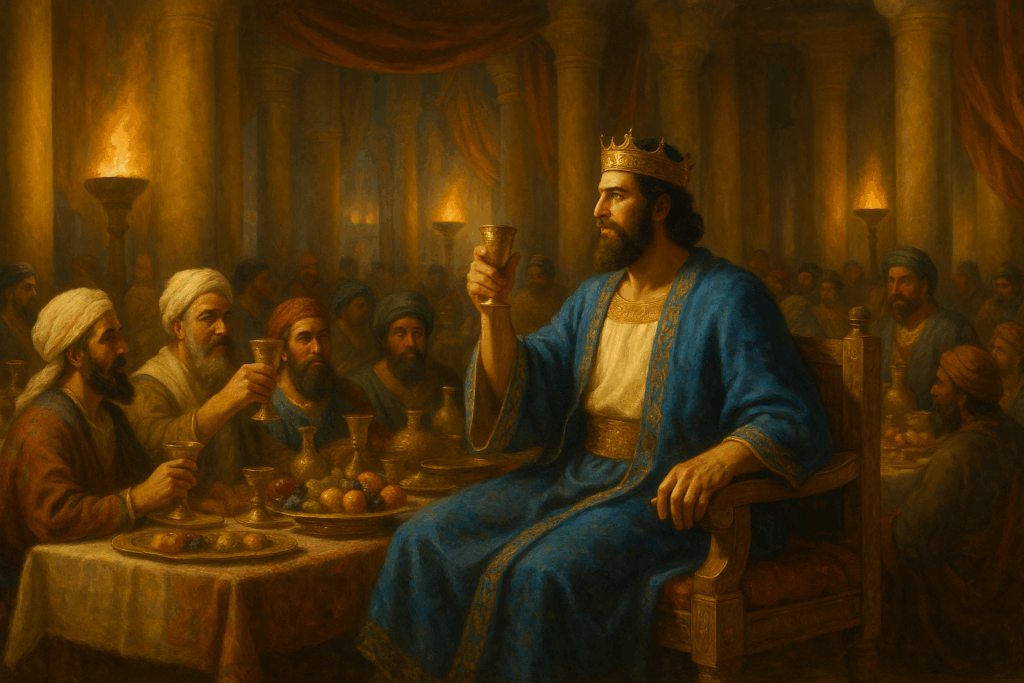
The story of Queen Esther begins not in Jerusalem, but in exile — deep within the glittering heart of the Persian Empire around 483 BCE. King Xerxes I (Ahasuerus in Hebrew) ruled from Susa, reigning over 127 provinces from India to Ethiopia. Persia stood at the height of its power — a world of wealth, conquest, and rigid hierarchy.
The Jewish people, carried into exile generations earlier by Babylon, now lived scattered and subdued — a displaced nation inside the world’s most dominant empire. Their faith survived through memory and quiet devotion, awaiting a God who seemed distant but was still weaving His plan.
“The Lord works out everything to its proper end.”
— Proverbs 16:4 (NIV)
The Fall of Queen Vashti and the Rise of Queen Esther
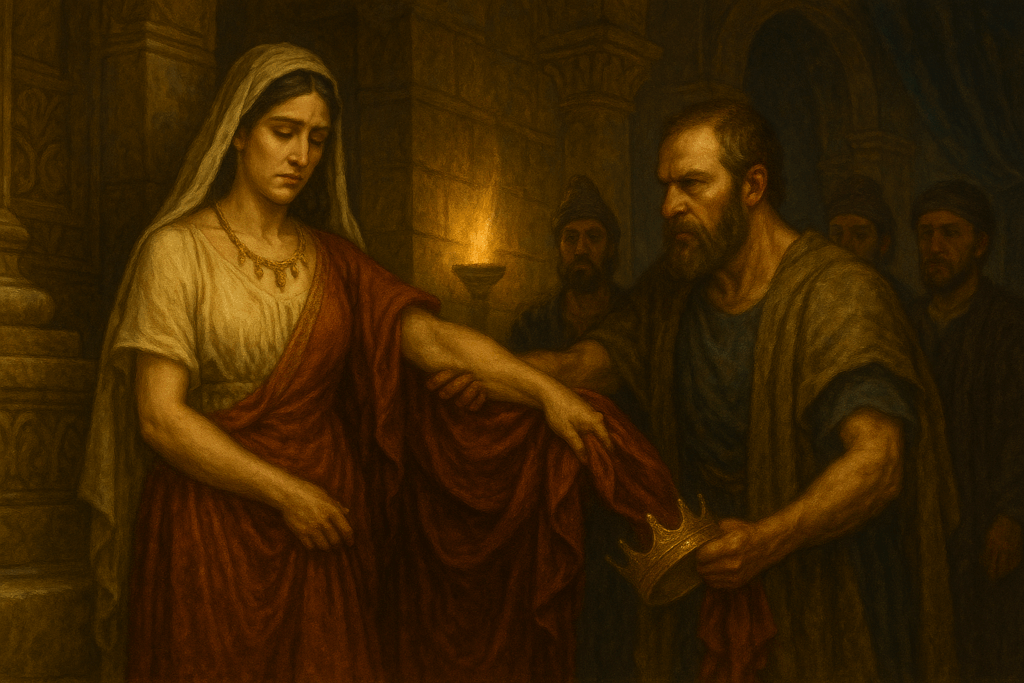
The story opens with a feast of excess. For six months, King Xerxes flaunted his wealth before nobles and officials. The celebration climaxed in a seven-day banquet within the palace gardens — gold cups, marble pillars, and royal pride on display.
Then came the breaking point. The king summoned Queen Vashti to appear “wearing her royal crown” before his guests — a command meant to parade her beauty as a trophy of his power. Vashti refused. Her defiance sent shockwaves through the empire.
Fearful of rebellion, Xerxes’ advisers declared a decree: Vashti was stripped of her title, and every man was to be “master in his own house.” One queen’s fall created a vacancy that divine providence had already prepared to fill.
“Many are the plans in a person’s heart, but it is the Lord’s purpose that prevails.”
— Proverbs 19:21 (NIV)
Queen Esther — A Hidden Life Chosen by God
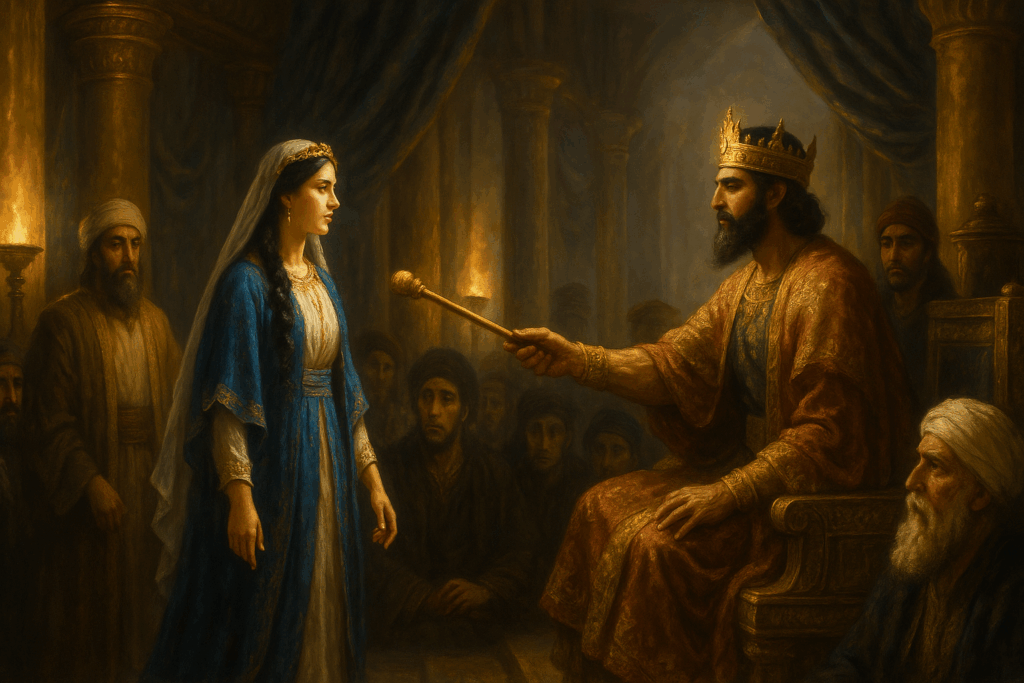
Queen Esther
When the search for a new queen began, young women from every province were gathered into the royal harem under the watch of Hegai, the eunuch in charge. Among them was Hadassah, known by her Persian name Esther — a Jewish orphan raised by her cousin Mordecai.
Without choice, Esther was taken from her home and placed into a palace that prized conformity and silence. Mordecai warned her not to reveal her Jewish heritage — wisdom that would later save a nation.
Esther’s rise was quiet. She didn’t push or scheme; she simply walked in grace. Scripture says,
“Esther found favor in the eyes of all who saw her.” (Esther 2:15)
When Queen Esther stood before King Xerxes, “the king loved Esther more than all the women” and set the royal crown upon her head. In a single moment, an orphaned exile became the queen of the most powerful empire on earth.
“Humble yourselves before the Lord, and he will lift you up.”
— James 4:10 (NIV)
The Hidden Hand of God – Queen Esther
The Book of Esther Bible Study may read like an ancient fairy tale — a brave young queen, a prideful king, an evil plot, and an unexpected victory — but this story is far more than a royal drama. In Esther: The Hidden Hand of God, Bible teacher Lydia Brownback helps readers uncover what’s really happening behind the scenes: the quiet, unshakable sovereignty of God. Read More —> Queen Esther
Mordecai’s Forgotten Act — The Thread of Providence
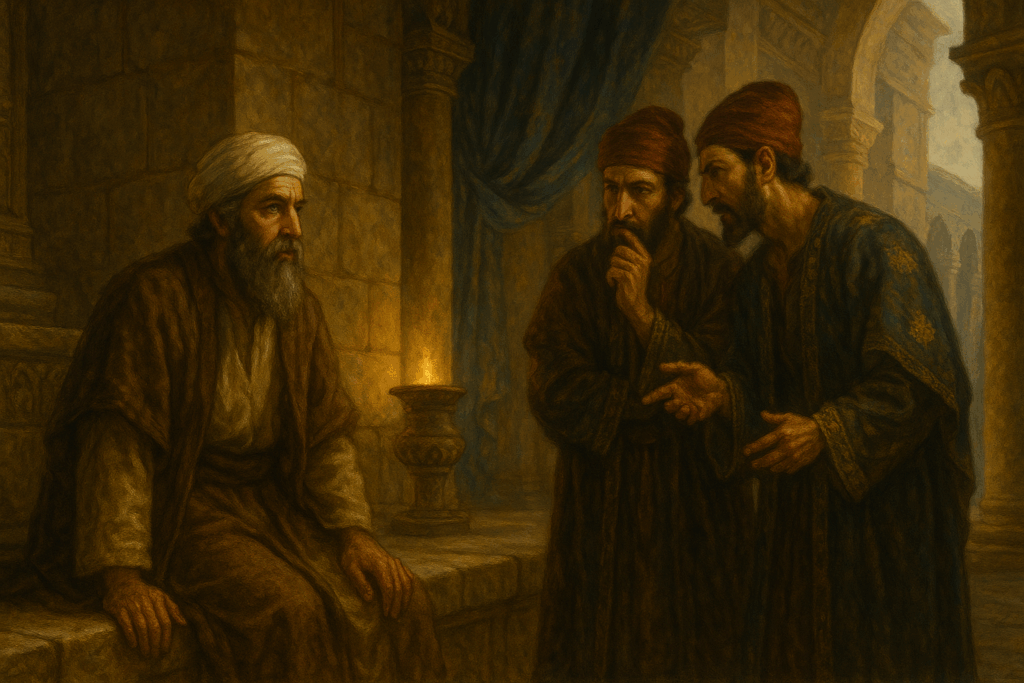
While Queen Esther adjusted to palace life, Mordecai served faithfully at the king’s gate. One day, he overheard a plot by two eunuchs to assassinate the king. Mordecai reported the conspiracy, saving Xerxes’ life. The event was written in the royal record but quickly forgotten.
That forgotten act became the hinge of divine timing. What seemed minor would later become the key that turned the entire story — a reminder that God’s hand moves quietly long before His plan becomes clear.
“And we know that in all things God works for the good of those who love him.”
— Romans 8:28 (NIV)
Queen Esther’s Hidden Courage
Though not yet revealed here, Queen Esther’s courage would soon be tested beyond comfort. Her placement was not for privilege but for purpose. She lived in a system that silenced women and rewarded obedience — yet God positioned her right where influence mattered most.
Every act of concealment, every moment of waiting, was preparation. The same God who moved her heart to obedience was aligning kings, laws, and nations for a rescue mission that would save His people.
“Be still, and know that I am God.”
— Psalm 46:10 (NIV)
God’s Name in the Silence
Curiously, the Book of Esther never mentions God’s name. Yet His fingerprints mark every decision, every coincidence, every sleepless night in the palace. In the silence, God’s providence resounds loudest.
Jewish tradition (Midrash Esther Rabbah) sees Esther’s hidden identity as wisdom — obedience to divine timing. Christian interpretation finds in her story the proof that even when God seems absent, He is intimately at work in unseen ways.
Queen Esther’s crown was not her victory — her surrender was. Her beauty opened a door; her courage would later walk through it.
“Now faith is confidence in what we hope for and assurance about what we do not see.”
— Hebrews 11:1 (NIV)
Reflection — Hidden Strength, Divine Purpose
The story of Queen Esther is more than ancient history; it’s a mirror for every believer who’s ever wondered if their season of waiting or obscurity has meaning. God’s call often begins where visibility ends — in the hidden, quiet obedience of the heart.
Like Queen Esther, we are called to stand in moments when the world bows to fear. Her courage wasn’t loud — it was steadfast. Her faith didn’t shout — it endured.
“The Lord will fight for you; you need only to be still.”
— Exodus 14:14 (NIV)
Every act of obedience, no matter how small, becomes part of a divine story that ripples beyond generations. God is still using ordinary people — in offices, classrooms, families, and nations — to rewrite history.
So if you find yourself hidden, waiting, or overlooked, remember Queen Esther. God may be preparing you for such a time as this.
Final Reflection
In a world obsessed with power and display, Queen Esther’s story teaches us that true strength is found in surrender, and true influence in faith. Her journey from exile to the throne is proof that God can turn captivity into calling.
“To our God and Father be glory for ever and ever. Amen.”
— Philippians 4:20 (NIV)


