
Exploring the powerful message of Jesus’ parable about the Good Samaritan, focusing on the shocking compassion of a Samaritan’s encounter with a Jew. Which they were viewed as an enemy by first-century Jews. Which this individual demonstrated true mercy and neighborly love. This story unpacks the depth of cultural hostility, the Samaritan’s courageous and costly actions. As we look into this further, we can see radical challenges in social boundaries. In the eye’s of Jesus, He redefines what it means to love one’s neighbor. Ultimately, it highlights the life-saving hope brought by unexpected mercy in a world often marked by division and neglect.
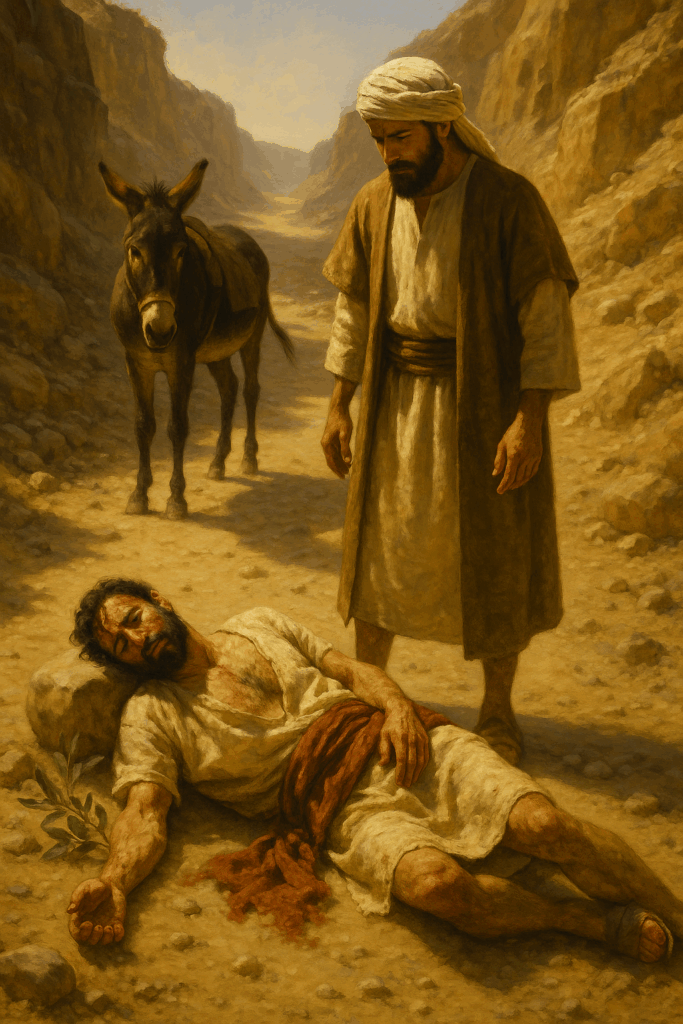
with Compassion
The Shocking Samaritan:
Breaking Barriers of Ancient Hostility of No Mercy
When Jesus finally introduces the third traveler in Luke 10:33, He does so with a phrase that would have stunned His audience: “But a Samaritan…” The shock is built into the conjunction itself. Listeners expected an ordinary Jewish layman to appear and offer the corrective compassion the priest and Levite withheld. Instead, Jesus inserts someone from a group despised by Jews and historically hostile toward them.
The hostility between Jews and Samaritans didn’t arise from a single conflict but centuries of religious, cultural, and political fracture. The Samaritans traced their lineage to the Northern Kingdom of Israel, to the tribes that remained after the Assyrian conquest described in 2 Kings 17. Samaritans worshiped the God of Israel but rejected parts of the Hebrew Scriptures beyond the Torah and built their own temple on Mount Gerizim. To first-century Jews, this was not a minor doctrinal difference—it was a deep wound. The relationship was defined by mutual distrust, contested worship, and accusations of theological corruption. Even the Gospel of John notes bluntly, “Jews have no dealings with Samaritans” (John 4:9).
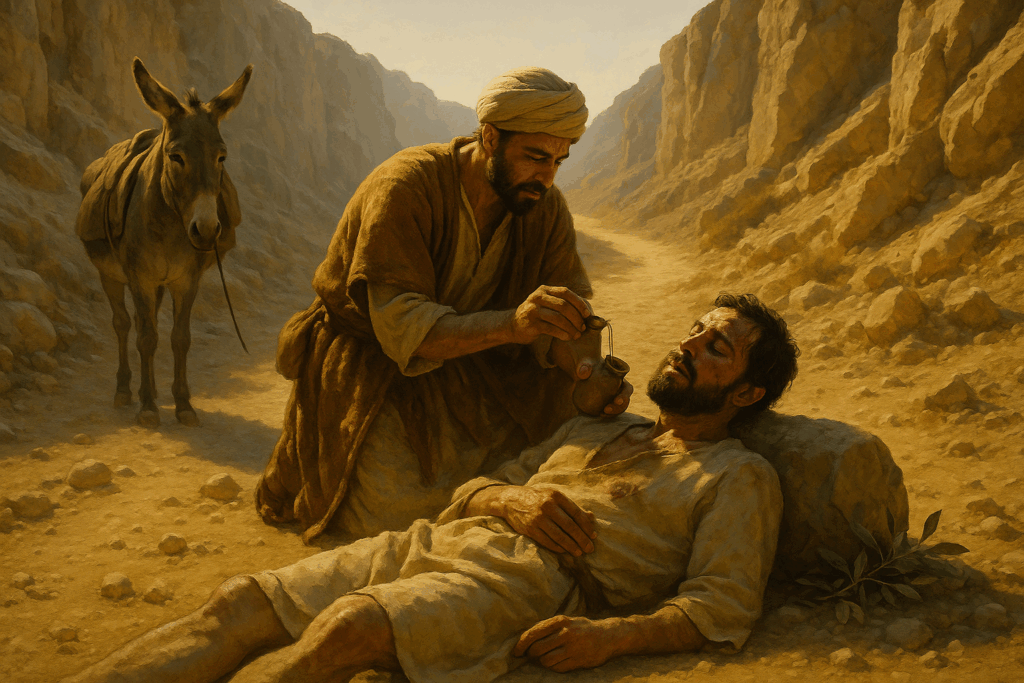
Shows Mercy
Compassion in Action:
The Samaritan’s Hands-On Mercy
Against that backdrop, Jesus’ next words land with seismic force: the Samaritan saw the wounded man and “had compassion.” The Greek term (σπλαγχνίζομαι) is a strong one—used in the Gospels for the deep, visceral mercy that moves Jesus Himself. The text doesn’t describe the Samaritan’s inner thoughts; Scripture simply presents his compassion as an observable reality displayed through action.
The scene shifts from cultural tension to embodied mercy. The Samaritan approaches the man—something neither the priest nor Levite did. He assesses the broken body lying in the dust, tends to the wounds using oil and wine, lifts the man onto his own animal, and guides him to an inn. Every act is concrete, costly, and visible. Nothing here is symbolic; Jesus describes physical actions anyone on that ancient road would recognize as laborious and risky.
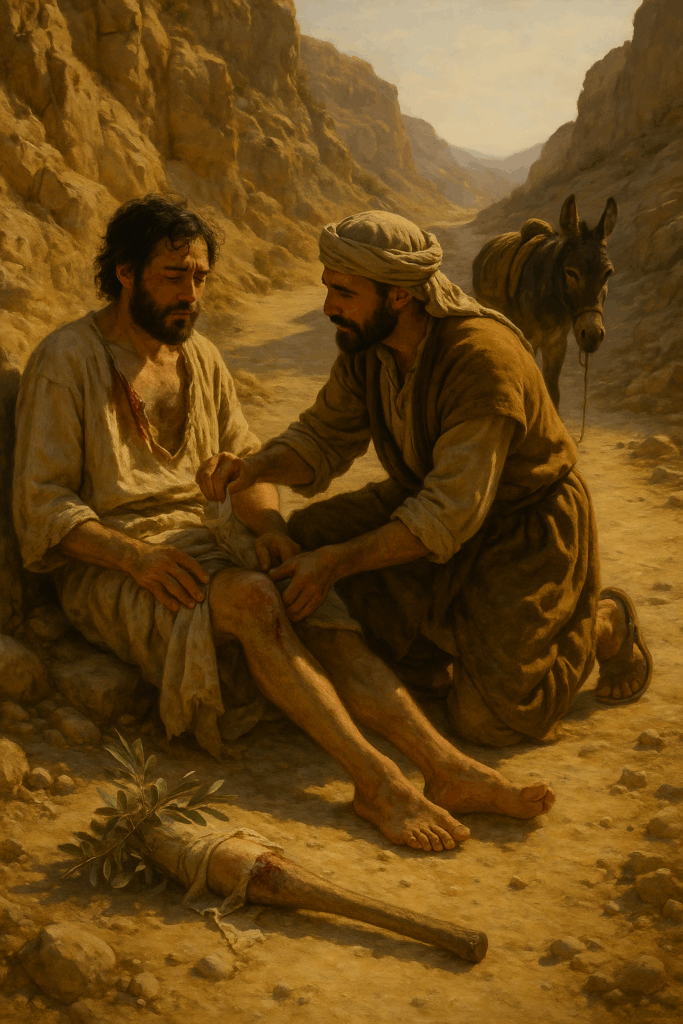
to the Man
Courageous Compassion:
Overcoming Fear to Show Mercy to the Enemy
The Samaritan’s decision is especially striking given the danger of the terrain. Bandits attacked travelers without warning, and helping an injured stranger could easily expose him to the same threat. Yet Jesus emphasizes no hesitation. The man acts with immediate, embodied mercy—not because the wounded traveler belongs to his people, not because he shares background or belief, but because compassion overrides hatred.
This moment challenges Jesus’ audience at multiple levels. They would have assumed that a Samaritan encountering a wounded Jew might avoid him—or even see the situation through the lens of entrenched hostility. Instead, Jesus reverses every expectation. The ethnic outsider becomes the moral center. The man historically identified as an enemy becomes the one who embodies the love of God more clearly than the religious professionals.
Radical Neighbor-Love:
Breaking Boundaries to Bring Life and Hope
What unfolds on the Jericho road is not an abstract lesson but a radical inversion of long-standing social boundaries. The Samaritan does what the priest and Levite would not: he closes the distance. In doing so, he exposes what true neighbor-love looks like—not sentimental, not theoretical, but costly, immediate action in the face of human suffering.
And for the dying man, this moment becomes the turning point between life and death. Compassion from an unexpected source becomes the first real breath of hope on a road where mercy was never expected to appear.
Read Previous: Transforming Mercy: The Good Samaritan and a Love That Crosses Every Divide


